
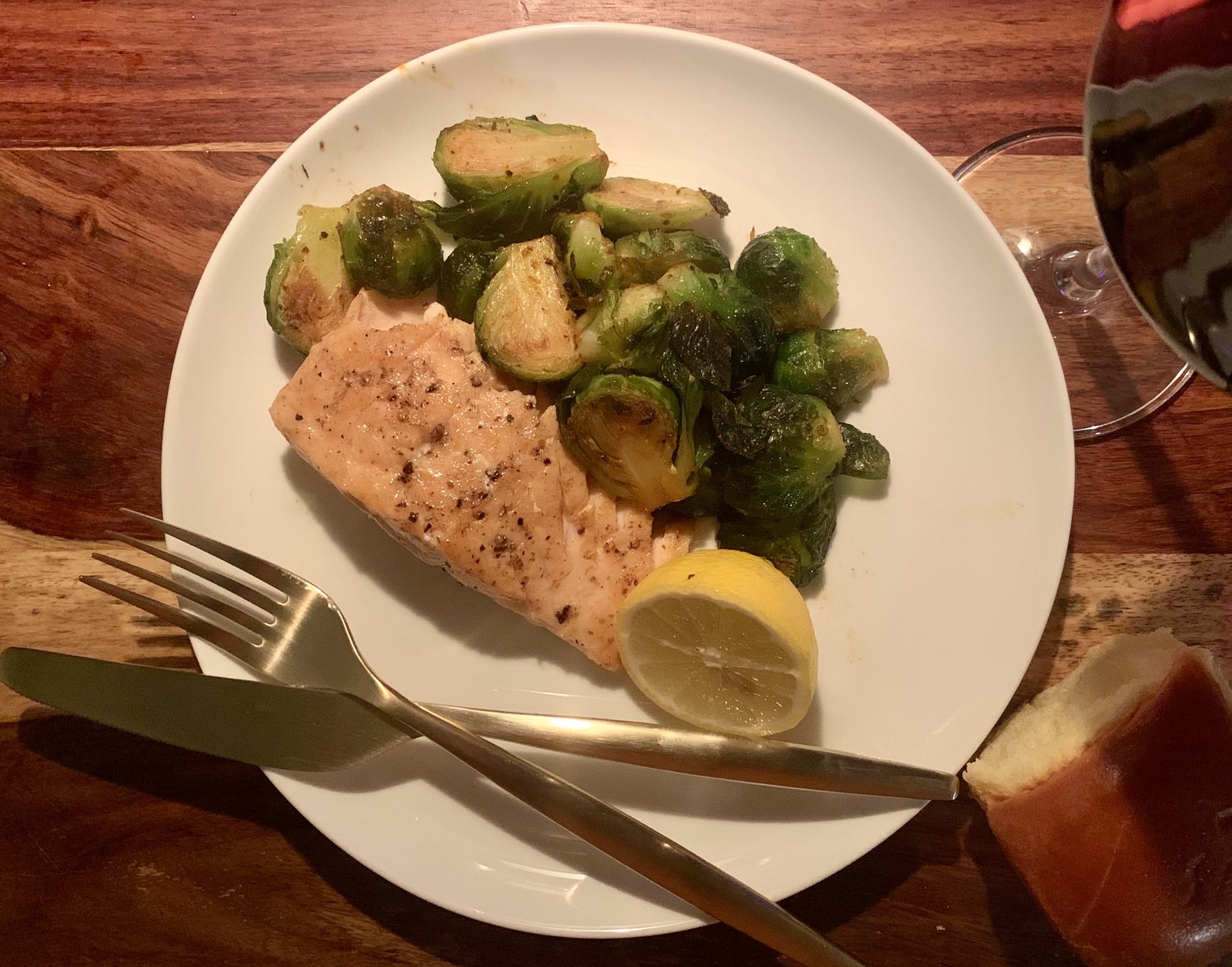
Years ago, I learned how to use a cast iron skillet while experimenting with my Cast Iron Chicken recipe. After that, I started wondering what else I could make with it. One thing I’ve always tried to include in my diet is enough fish to meet my omega-3 needs and cast iron salmon quickly became my go-to.
If you’re learning how to cook salmon or simply want a reliable, healthy recipe that highlights the natural flavor of the fish, this is a great place to start. The method is quick, beginner-friendly, and produces tender, flaky salmon that feels like something you’d order from the local wine bar.
Why Omega-3s Matter
Omega-3 fatty acids are essential for heart and brain health, yet many people fall short of the recommended amount. While some plant sources like chia seeds and flaxseeds contain omega-3s, research suggests that these forms are not absorbed as efficiently as those found in fish.
According to the USDA FoodData Central, a 3.5 ounce cooked portion of wild caught, Atlantic salmon provides 1,728 mg of omega-3 fatty acids, exceeding the daily recommended intake for most adults. Including salmon regularly in your diet can help support cardiovascular health, reduce inflammation, and promote healthy cell function.
The National Institutes of Health’s Omega-3 Fatty Acids Fact Sheet explains that marine-based omega-3s (EPA and DHA) are more readily used by the body than plant-based forms (ALA). Similarly, experts at the Harvard T.H. Chan School of Public Health note that eating fatty fish like salmon supports heart health, helps manage inflammation, and may improve cognitive function.
With a similar method to the cast iron chicken recipe, you can take salmon from stove to oven in under 20 minutes for a meal that feels comforting, flavorful, and deeply nourishing.
Ingredient Notes
Salmon:
Choose a fresh, high-quality salmon filet from a trusted market or grocery store. Great salmon speaks for itself with just a drizzle of olive oil and a sprinkle of salt and pepper.
Seasonings:
Have fun experimenting with flavor profiles depending on your mood or side dishes:
- Honey-Ginger Citrus: honey, fresh ginger, lemon juice, salt, and pepper
- Sweet & Savory: date sugar, paprika, garlic powder, smoked salt, and pepper
- Classic Blackened: blackened or seafood seasoning blend
- BBQ Glaze: your favorite BBQ rub with a touch of brown sugar if not already included
Step-by-Step Instructions
Ingredients:
- 1 pound salmon filet (or 3–4 four-ounce portions, one portion a serving)
- Olive oil
- Seasonings of choice, plus lemon juice or honey if using
Instructions:
- Preheat oven to 425°F.
- Drizzle salmon with olive oil. If using honey or another liquid ingredient, add it now and coat evenly with your hands or a silicone pastry brush.
- Sprinkle both sides with your chosen seasonings.
- Heat your cast iron skillet over medium-high heat and add a drizzle of oil.
- Once hot, sear the skinless side first for one minute, then flip so the skin side is down before placing the skillet in the oven. This helps the skin peel off easily once the salmon is done.
- Bake for 14-20 minutes, or until the internal temperature reaches 145°F.
- Carefully remove from the oven and let the salmon rest for 5 minutes before serving.
(Always wear oven mitts when handling the skillet, as the handle will be extremely hot.)
Serve with your favorite sides for a balanced and satisfying meal.
Serving Ideas
Try pairing your salmon with one or two sides that balance its rich flavor:
- Oven Roasted Brussel sprouts or Broccoli
- Cast Iron Asparagus or Stovetop Green Beans
- Risotto or Cauliflower Rice Pilaf
- Boiled baby potatoes with a light olive oil drizzle
- A Fresh Salad with cucumber, tomato, and a light lemon vinaigrette
FAQs
1. How often should I eat salmon for omega-3 benefits?
The American Heart Association recommends eating fatty fish like salmon at least twice per week for optimal heart and brain health.
2. Can I make this recipe without a cast iron skillet?
Yes. You can use any oven-safe, heavy-bottomed skillet to achieve a similar sear and texture.
3. What’s the best way to tell if salmon is done?
The flesh should be opaque and flake easily with a fork. Using a meat thermometer is the most reliable method. Aim for 145°F at the thickest part.
4. How long does leftover salmon stay good in the fridge?
Store leftovers in an airtight container for up to 3 days. Reheat gently in the oven or skillet to preserve moisture.

Cast Iron Seared Salmon
Equipment
- Cast iron skillet 10 to 12 inch pan
- Oven mitts
- Meat thermometer
Ingredients
- 1 lb salmon filet May alternatively do 4 oz portion sizes, one portion a serving. In my location, it is cheaper to buy a larger filet by the pound.
- 1-2 tbsp olive oil (divided) 1 tbsp for the salmon, 1 tbsp for the pan
- Seasonings of choice, plus lemon juice or honey if using See above for seasoning suggestions. Note that all good quality salmon needs is a sprinkle of salt and freshly ground pepper!
Instructions
- Preheat oven to 425°F.
- Drizzle salmon with olive oil. If using honey or another liquid ingredient, add it now and coat evenly with your hands or a silicone pastry brush.
- Sprinkle both sides with your chosen seasonings.
- Heat your cast iron skillet over medium-high heat and add a drizzle of oil.
- Once hot, sear the skinless side first for one minute, then flip so the skin side is down before placing the skillet in the oven. This helps the skin peel off easily once the salmon is done.
- Bake for 14-20 minutes, or until the internal temperature reaches 145°F.
- Carefully remove from the oven and let the salmon rest for 5 minutes before serving. (Always wear oven mitts when handling the skillet, as the handle will be extremely hot.)
Final Thoughts
Cooking salmon in a cast iron skillet brings a wonderful balance of simplicity and nourishment. The sizzle of olive oil, the warmth of the kitchen, and the aroma of seared fish make even a weeknight meal feel special.
Healthy doesn’t have to mean complicated. Sometimes, it’s just one good skillet and a few thoughtful ingredients away.